



The Research and Applied AI Summit (RAAIS) is a community for entrepreneurs and researchers who accelerate the science and applications of AI technology. The 10th annual summit takes place on June 12th, 2026 in London. We are delighted to announce Hadrien Canter as a speaker.

Hadrien is co-founder and CEO of Alta Ares, an AI-first air defense company building an integrated platform for detection, identification, tracking, and interception. Founded in 2024, it works on one of the most demanding problems in applied AI: defending against mass-produced attack drones, cruise missiles, and glide bombs in contested environments, where a system has to perform in seconds, at the edge, and under operational pressure.
Alta Ares began as a software company focused on intelligence, surveillance, and reconnaissance (ISR) video analysis. The feedback loop from Ukraine pushed it into a wider air defense architecture spanning data-fusion software, edge AI, and hardware effectors built to operate from Arctic to desert conditions. Its stack includes Pixel Lock for embedded detection, tracking, and terminal guidance; Gamma for autonomous interceptor guidance; X-Lock for short-range drone interception; and Black Bird for faster aerial threats.
Why the air defense gap is so large
Recent salvos over Eastern Europe and the Middle East have exposed a hard truth: legacy air defense systems built to stop fast jets are losing the economics against mass-produced aerial threats. NATO partners increasingly face coordinated waves of one-way attack UAVs paired with cruise missiles and glide bombs. This is an enormous problem that is defining capability gaps in modern defense.
Unlike many AI applications, air defense is not forgiving. The enemy object is small, fast, and often deliberately cheap. The operator may be tired, cold, and working at night. The environment may be jammed. Protecting people, critical infrastructure, and military assets now demands systems engineered from day one for autonomy, modularity, interoperability, and unit-cost discipline.
That is what makes counter-UAS such an important test case for applied AI. There are many hard parts to the problem: recognizing an object in a poor quality video feed, fusing sensor inputs, holding a track, guiding an interceptor, preserving human control over the final engagement decision, and doing all of it inside a system that can be carried, deployed, and iterated quickly. Pixel Lock is Alta Ares’ answer: onboard computer vision that detects, classifies, and tracks targets in real time and supports autonomous terminal guidance while keeping the operator in the loop. Here the AI sits inside the control chain itself, guiding the interceptor rather than only flagging a target for an operator to act on.
The Ukraine feedback loop
Alta Ares’ development is shaped by proximity to the battlefield. Interceptors running Pixel Lock began shooting down Shahed-type drones in November 2025. Hadrien’s public interviews describe an engineering culture built around fast field feedback: simulation helps, but the front line reveals failure modes a lab cannot.
That loop matters because drone warfare is changing faster than long procurement cycles and static product roadmaps can absorb. Threats adapt, operators adapt, and countermeasures adapt in turn. The companies that make a difference in this category are the ones that can move from deployment to model improvement to hardware iteration without treating each step as a separate world.
From software to systems
Alta Ares’ public milestones track a company moving from software into an integrated air defense architecture. In March 2025, NATO Allied Command Transformation named Team Alta Ares the winner of its 15th Innovation Challenge for an “Embedded AI for Recognition, Detection, and Identification” submission focused on glide bombs - a system that detects, identifies, and predicts the trajectory of these low-cost guided munitions from visual and acoustic data.
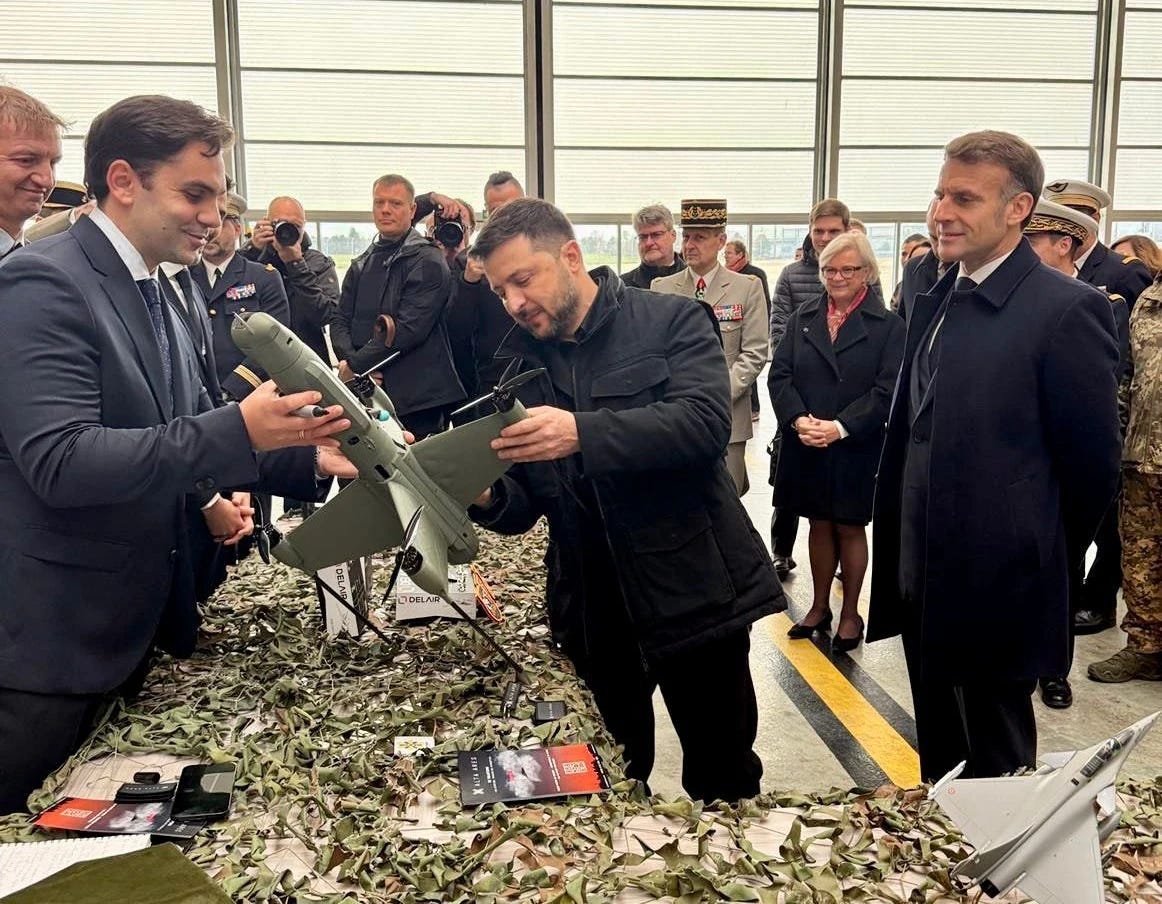
Later in 2025, Alta Ares demonstrated its drone-interception system to NATO at the DGA missile test site in Biscarrosse. The company calls the configuration a Tactical Protection Dome: radars, interceptor drones, data fusion, and Pixel Lock software.
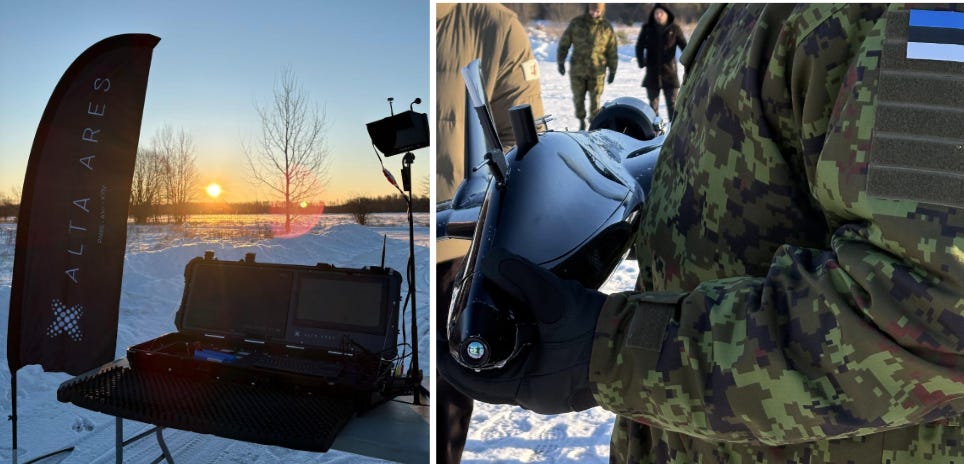
The most recent milestone came in Estonia. Early in 2026, working with the Estonian Defense Forces and Ukrainian partners, Alta Ares tested Black Bird, its turbojet-powered interceptor, in Arctic conditions. The company reported three consecutive flights, ground temperatures of -17 degrees Celsius and -25 degrees Celsius at altitude, and a top recorded speed of 450 km/h. The trial also validated the less cinematic but more important parts of the system: communication links, antenna performance, live video transmission, and Pixel Lock target detection, tracking, and locking. In parallel, the company has begun mass-producing interceptor drones in France.
Why it matters for RAAIS
The next generation of air defense is being built as layered systems: sensors, command and control, autonomy, and low-cost effectors combined quickly enough to keep pace with changing threats. NATO’s own 2026 work on layered counter-UAS points the same way, treating the challenge as one of integrating sensors, effectors, electronic warfare, command systems, and battlefield lessons into something coherent. Alta Ares is one version of that thesis, built from the edge inward: European, field-informed, and aimed at a class of threats that has already changed the character of modern conflict.
For RAAIS, the interest goes beyond defense. Alta Ares is a working case study in applied AI inside a live operational system, where robustness, cost, latency, and human judgment all bind at once. The same problem shows up across robotics, autonomy, and other high-consequence settings, where a model that performs on a benchmark still has to keep working once it meets conditions that shift under it.
Hadrien’s background
Hadrien’s path into defense technology is unusual. Before Alta Ares, his public background spanned law, Ukraine, and operational fieldwork rather than a conventional defense prime career. He studied at the University of Paris 1 Panthéon-Sorbonne, qualified with the Paris Bar, served as an OSCE international observer around Mariupol in 2019, and worked on humanitarian projects in Eastern Ukraine.
That background shows in the company he has built. Alta Ares designs from the operational problem backward: what the operator sees, what they miss under stress, how fast the threat changes, and what kind of AI stack survives that reality.