



A few days before he walked on stage at RAAIS, we led the $60M Series A in Hadrien Canter’s company, Alta Ares. Two days before the talk, with the round barely closed, he signed a partnership with Airbus. Alta Ares is a next-generation defense prime built around a single, especially critical problem: shooting cheap flying objects out of the sky before they reach a city. Shaheds, cruise missiles, the mass-produced munitions that have made the last four years of war look nothing like the wars Europe prepared for. Defense had not come up once in a day of talks about models and medicine and code. I wanted the room to hear what applied AI looks like when the test set shoots back.
The continent lost the sky
Hadrien arrived in Ukraine in the first week of March 2022, a week after the full-scale invasion. What he saw was a kind of war NATO had forgotten how to fight: “a high and long intensity warfare,” not the small expeditionary operations in Africa and the Middle East where the West always owned the air. For the first time in modern European history, he argues, “Ukraine, but also NATO, doesn’t have the upper hand on the air superiority.” The weapon that took it away is almost insultingly cheap. As Hadrien traces its lineage, the Shahed-136 is a slow, low-flying design first drawn up by German engineers, then copied in turn by the Israelis, the Iranians, the Russians, and now the Americans. “Nothing changes through the years,” he said. The economics did.
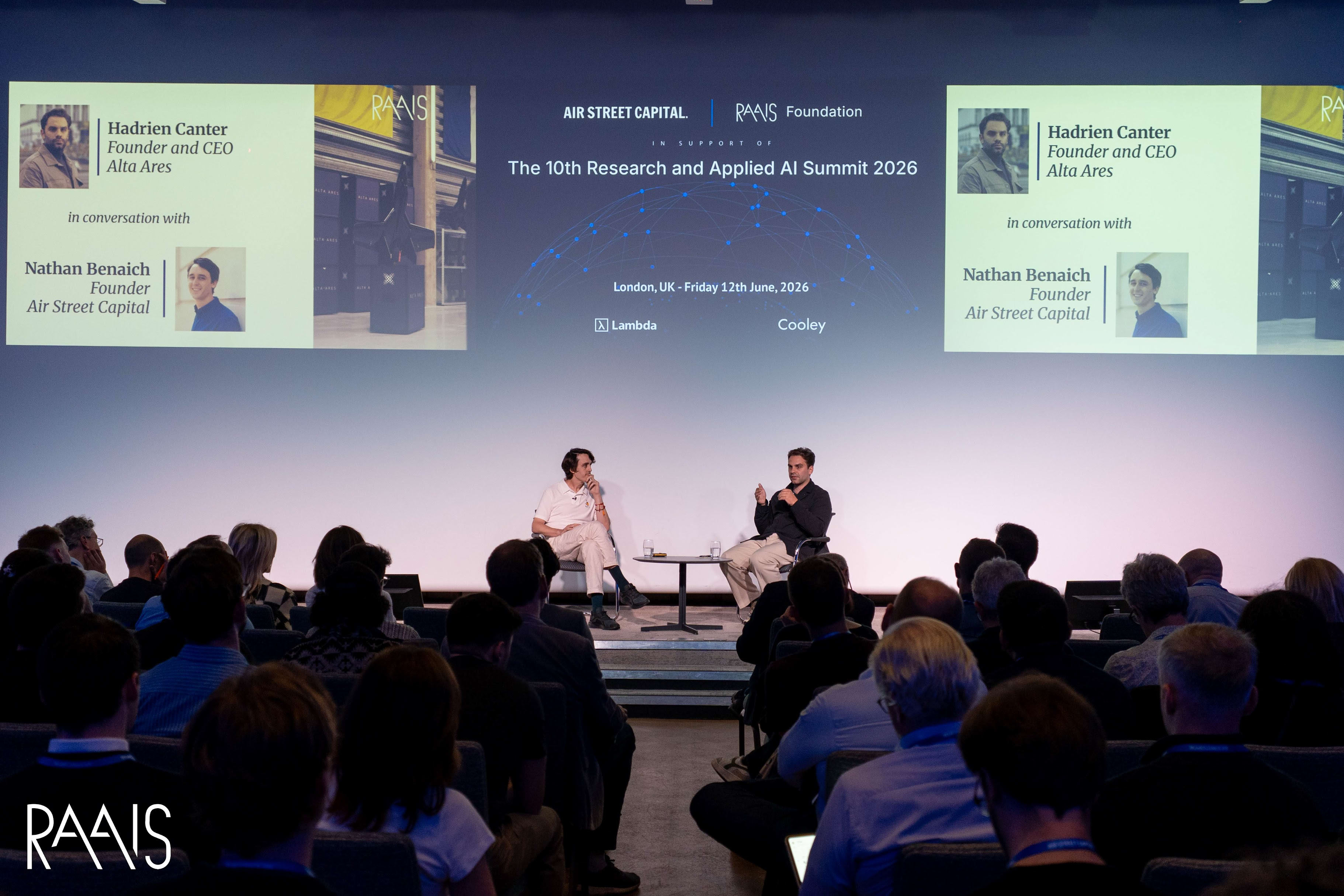
Most of the time, it misses
I asked him to walk through the data loop, the thing every speaker that day had described from behind a laptop: get representative data, run the model, grade the output, go again. Alta Ares runs it in a field at night. “Most of the time it doesn’t hit,” he said, and that is the whole problem. There is rarely internet at the edge and never a data center, so everything runs on “super compressed” models on small GPUs inside the interceptor. A mission has three phases. Radar detection sorts friendly from hostile. Then an interceptor flies into a kill zone roughly two kilometers wide, where an RGB and an infrared camera hunt the sky for a single pixel that is genuinely hard to find, because the feed is low quality and the airspace is being jammed. Then a human, still in the loop, commits to the intercept. One target is tractable. A swarm is not.
The loop only tightens if you close it fast. Alta Ares keeps around twenty engineers in Ukraine, as close to the front as Hadrien can put them, and combat-tests “every week or every two weeks.” The hardware turns over constantly; the vision models update remotely as more data comes back. They do not call the things drones. “We call them munitions, because it doesn’t come back,” he said. There is an 800-gram warhead in the nose. “I don’t recommend them to come back.”
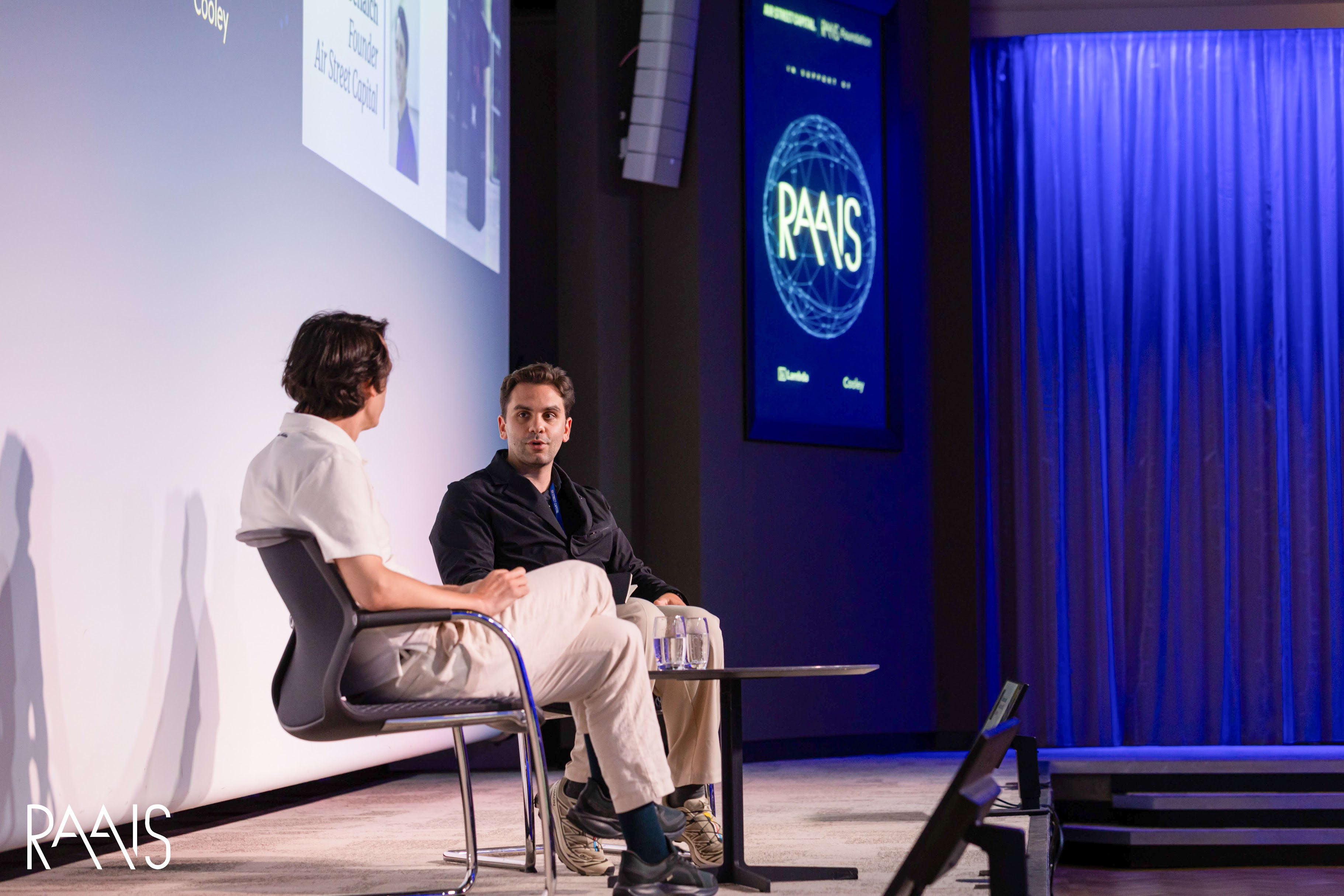
What no simulation can reproduce
Simulation, he allowed, is good for a proof of concept and little more, and the reason is human rather than technical. The engineer who runs a test slept well, had breakfast, had a good coffee, “almost as good as the tea in England.” The operator who fires the system in Ukraine is on their fifth coffee “that doesn’t wake you up anymore,” at 3 a.m., freezing, running on adrenaline, and far less trained. No amount of lab time closes that gap, and no simulator renders the adversary. The Shaheds his team intercepts have started carrying rear-facing sensors that trigger evasive maneuvers when an interceptor closes in. Others fly in a mesh, so when one is shot down another inherits the firing solution. Much of the underlying technology, he said, is Chinese, routed to Russia and Iran. The lesson Hadrien draws is that classical computer vision is not enough against an opponent that keeps learning, and the only thing that trains a system to beat it is real data from real intercepts, which no simulation can manufacture.
Quantity is the quality
So why isn’t modern air defense everywhere? Because NATO and Europe bought small numbers of exquisite systems on the assumption that they would always own the air, and that assumption is gone. “The new reality is that the quantity is the quality,” he said. A sophisticated interceptor fielded in low numbers gets outgunned. Israel’s Iron Dome works because Israel is small to defend, and even so, by his account, “Israel used 35% of the world’s stock of Patriot missiles in only the first 10 days” of the war. Interception is never a sure thing: “never 100%,” he said, somewhere between 25% and 75% on the best systems. The fix is as industrial as it is technical, and the budgets are still pointed the wrong way. France is spending more, he noted, but just committed 10 billion euros to an aircraft carrier that, he argued, takes a decade to build and that a hundred cheap unmanned boats could sink. He put the politics of it in one line: “during peace time, you have time, but you don’t have money. And during war times, you don’t have time, but you have money.”
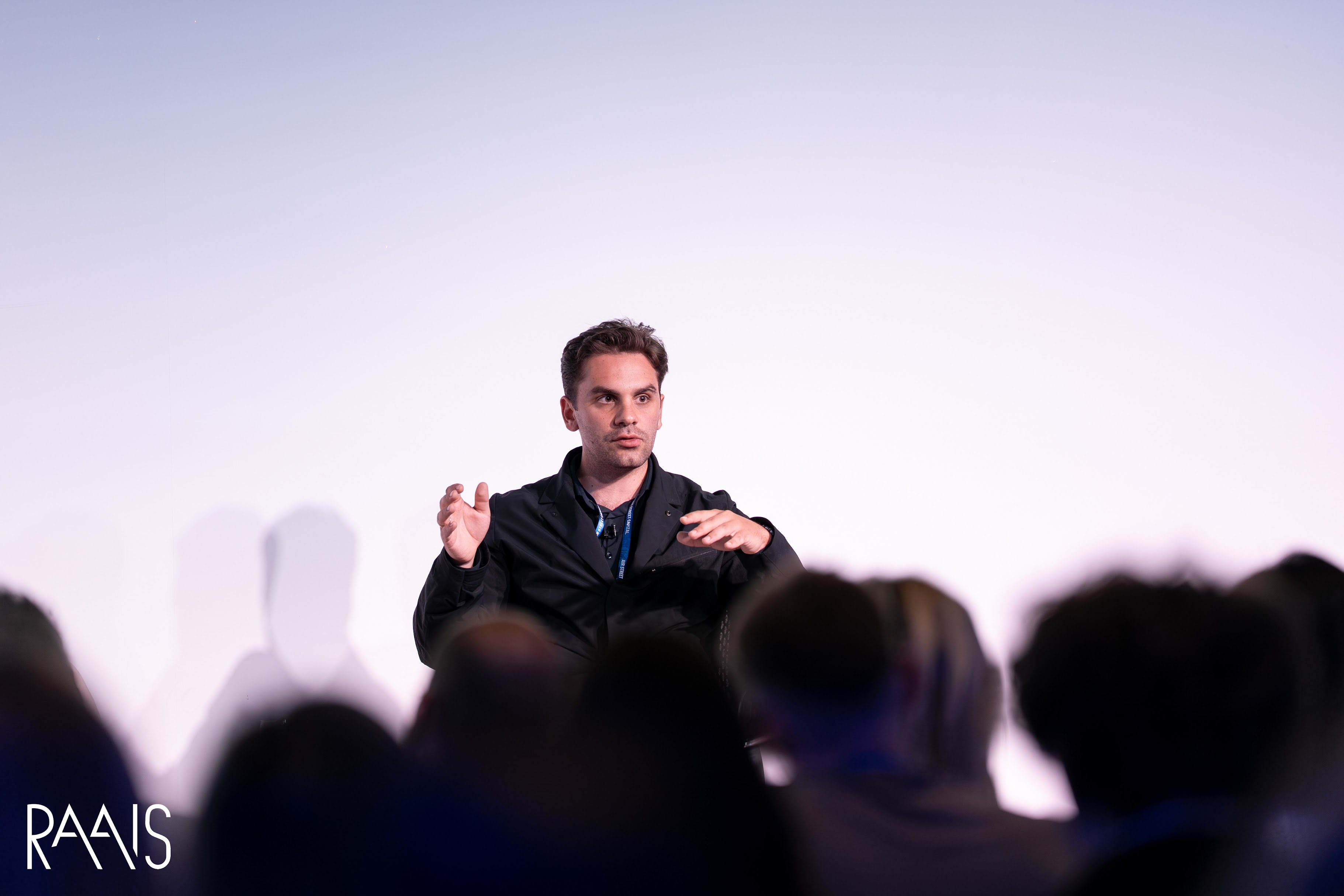
The talent turn toward European defense
Talent has become his strange dividend of the moment. “One of our best talent acquisitors, his name is Donald Trump,” he said. When JD Vance told the Munich Security Conference that American and European interests had diverged, well-qualified engineers at US companies in London started leaving to build European defense instead. What he sells them is accountability and proximity: write something in the morning, watch it deployed on the front by night. Alta Ares does no offensive weapons, “so far.” And in his telling, this work is the precondition for everyone else’s. The clinical trials, the healthcare, the AI-for-good that had filled the rest of the day are “possible because we live in a country at peace.” Bomb the data center and none of it ships.
Pressed by an audience member to separate the founder from the person, he couldn’t, and didn’t try. He reached for the old Roman maxim, si vis pacem, para bellum: if you want peace, prepare for war. Europe stopped preparing, and “the use of force is being democratized” faster than its institutions have noticed. You can annex territory now, he said, and no one does anything about it. He was honest about the discomfort of his own business: “I would sleep way better if tomorrow the war in Ukraine stops.” But he doesn’t think it will, and his case for rearming rests on a grim simplicity. The people on the other side keep telling us what they intend, so “we should listen to them, because at least they are being transparent.” Freedom doesn’t come for free.
