Where it all began
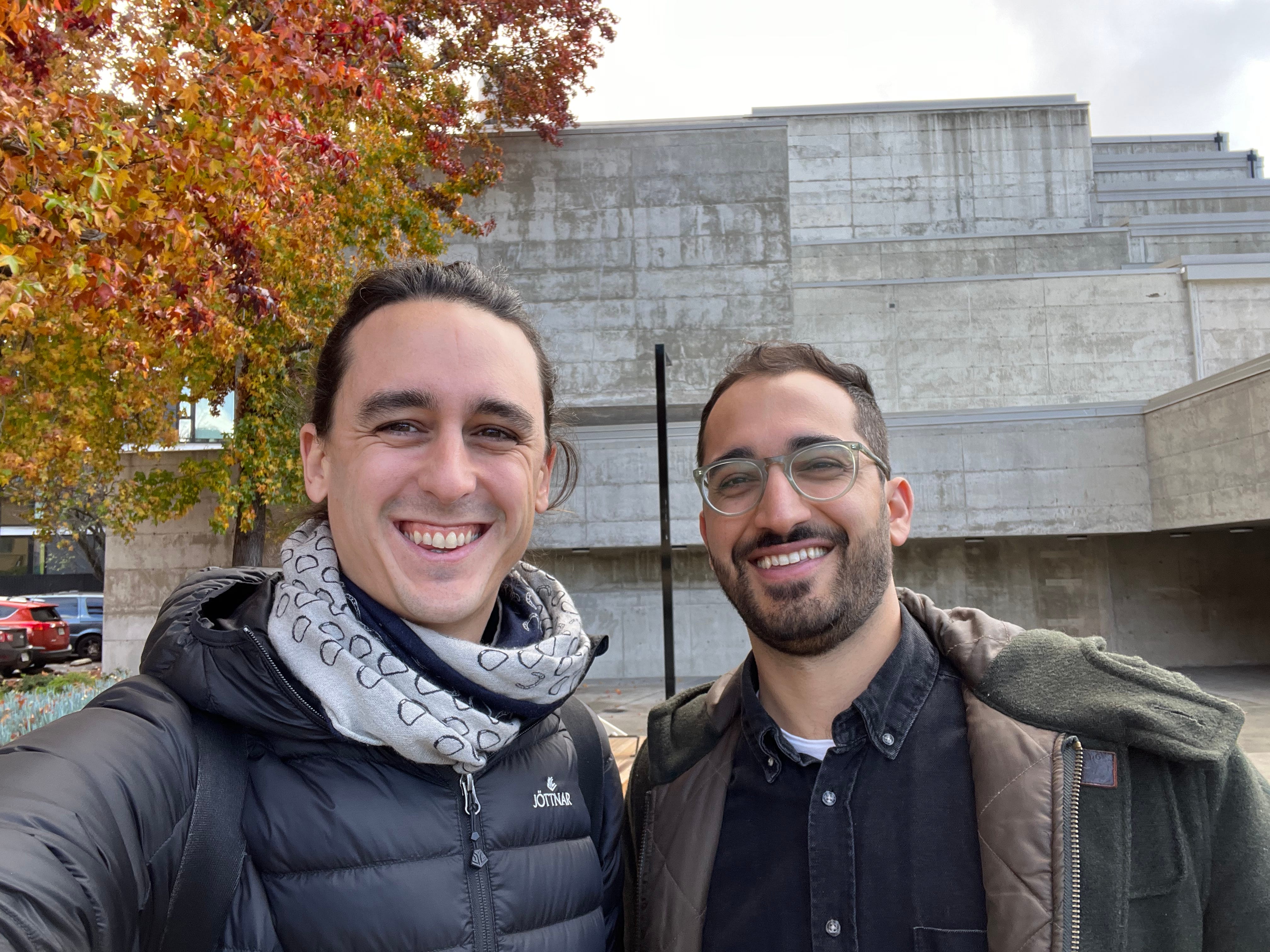
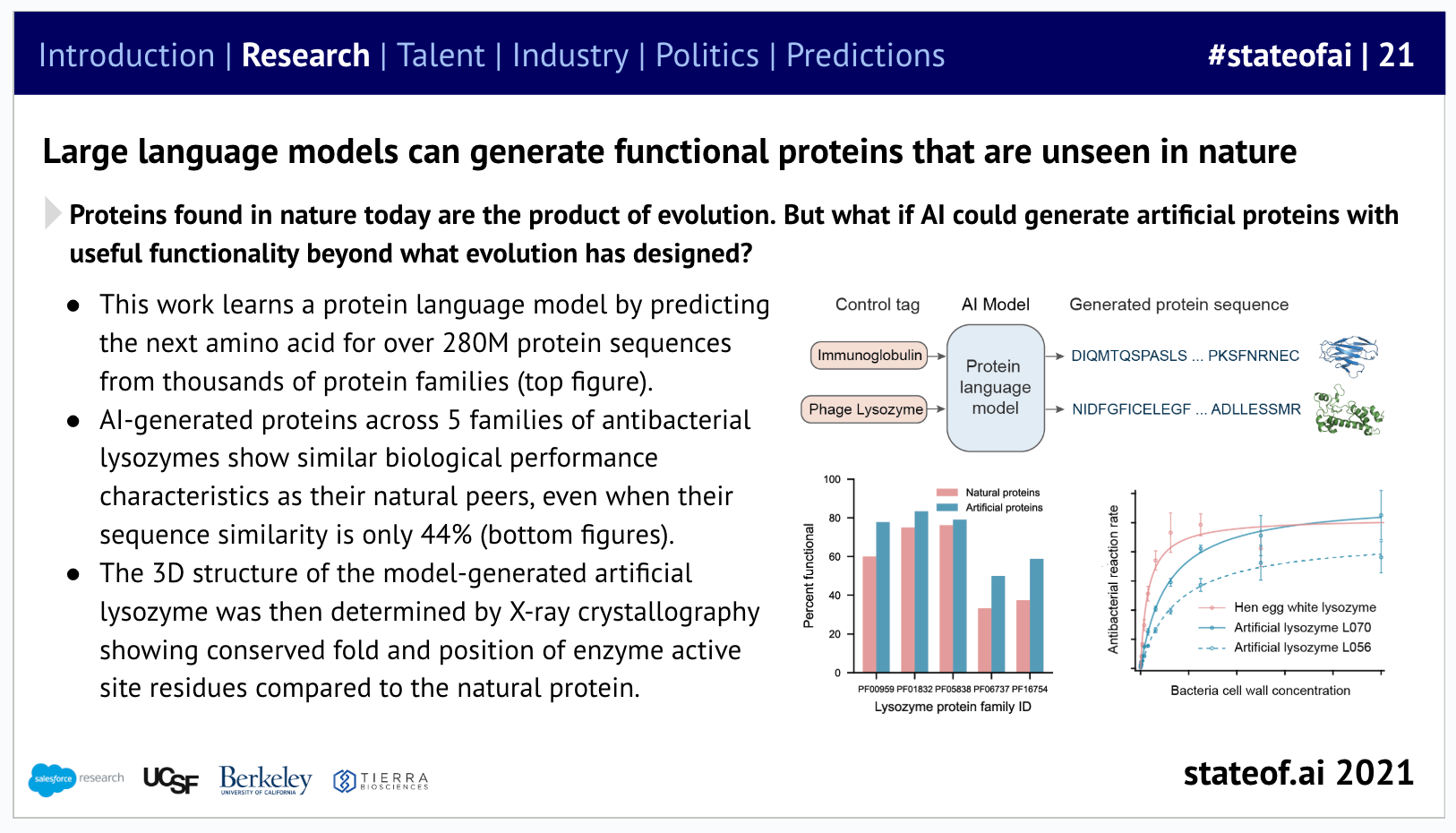
I first reached out to Ali Madani in 2021 via a Twitter DM after featuring his team’s breakthrough work on AI‑generated proteins in that year’s State of AI Report. It caught my attention as one of the first real proofs that generative models could produce functional biological machinery that outperformed naturally occurring variants. The Salesforce Research preprint, later published in Nature Biotechnology, showed that large language models could generate de novo proteins that functioned as well as, or better than, those found in nature. It was the clearest evidence yet that biology could be written with intent rather than discovered by chance. A few months later, Ali founded Profluent, and I wrote one of the largest first checks in Air Street’s history.
Now, that early idea has become a defining company at the frontier of AI-first biology. Profluent has raised $106M led by Bezos Expeditions and Altimeter, with continued support from Air Street, Spark, and Insight. The company is now the largest position in Air Street’s second fund. This new capital, which brings the total raised to $150M, accelerates the company’s path toward scaling frontier protein models and, ultimately, delivering the first AI-designed therapeutic to a human patient.
The shift from serendipity to design
For decades, biological progress relied on chance discoveries: CRISPR stumbled upon in bacteria, antibodies evolved through slow mutagenesis, enzymes refined through years of directed evolution. In 2019, I argued that the next generation of biotech companies would break from this pattern and move toward deliberate, AI-driven design. Profluent is the strongest realisation of that shift.
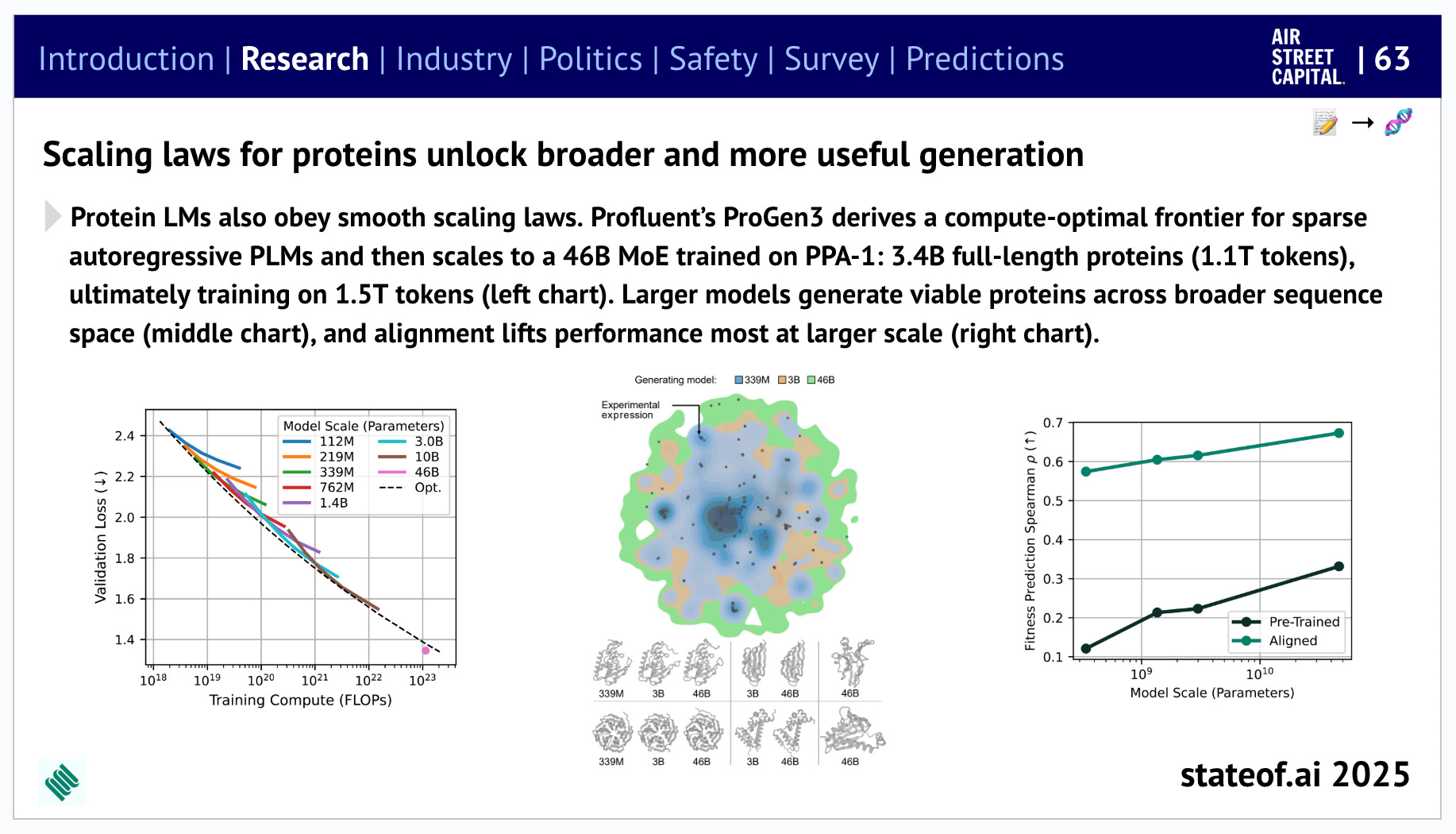
In just three years, the company has built the world’s largest private corpus of natural proteins, the Profluent Protein Atlas, and demonstrated - clearly and repeatedly - that scaling laws apply to biological design. ProGen evolved into ProGen3, a frontier-scale model capable of generating functional proteins across diverse families. Larger models predict function better and produced proteins that folded, bound and acted in cells in ways nature never explored.
Breakthroughs that changed the field
The moment that crystallised Profluent’s leadership was OpenCRISPR‑1, the first AI-designed genome editor. Released openly, it was downloaded tens of thousands of times within a day, with more than a hundred licence requests from pharma, agriculture, biotech, and academic labs. For the first time, a large model had generated a genome-editing molecule from scratch.
Profluent has since expanded the frontier with E1, the first retrieval-augmented model for protein engineering - bringing techniques from natural language systems directly into biological design. And with Protein2PAM, the team made gene editors programmable with high precision by designing the exact DNA motifs they can recognise. This unlocks edits at genomic sites previously out of reach and extends the company’s capabilities into antibodies, enzymes and other high‑value modalities.
Profluent’s scientific momentum has translated into commercial traction across multiple industries. A multi‑year collaboration with Corteva Agriscience is applying frontier gene-editing tools to next‑generation crops. A strategic partnership with Revvity combines Profluent’s AI-engineered enzymes with the Pin‑point™ base‑editing platform to produce more precise adenine deaminases. And with Integrated DNA Technologies, Profluent is co‑designing enzymes that move seamlessly from in silico creation to ready‑to‑use reagents for researchers.

What this capital unlocks
This $106M round enables Profluent to scale its foundation models even further, expand its automated wet‑lab capacity, and strengthen its commercial footprint across three major verticals. Most importantly, it brings the company closer to an extraordinary milestone: dosing the first human patient with an AI‑designed therapeutic.
My conviction in Profluent has only deepened over the years of our collaboration and work to get to this inflection point. Ali and the team have shown technical originality, scientific rigour, and execution speed at a level rarely seen. Profluent is defining the shift from reading biology to writing it.
I’m proud to continue supporting them as they push programmable biology into its next, most consequential chapter.